Septic Tank Size Calculator: Find the Right Gallon Capacity for Your Home
Use this septic tank sizing calculator to determine the correct tank capacity for your home. Enter your bedroom count, number of occupants, daily water usage, and whether you have a garbage disposal — the calculator will recommend a tank size in gallons and check it against common code minimums.
Best Septic Tank for You:


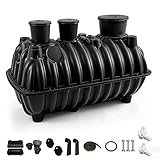
Why Septic Tank Sizing Matters: A Complete Guide to Capacity, Code Requirements, and System Longevity
A septic tank is the first and most important component of an onsite wastewater treatment system. Its job is to hold raw sewage long enough for solids to settle to the bottom (forming sludge) and fats, oils, and grease to float to the top (forming scum). The clear liquid in the middle flows out to the drainfield, where it is further treated by soil bacteria. If the tank is too small, solids do not have enough time to settle, and they get carried into the drainfield, clogging the soil and causing expensive system failure. If the tank is oversized, you pay more upfront without much benefit. Correct sizing is a balance between household demand, local code requirements, and practical installation constraints. This calculator helps you find the right capacity by considering bedrooms, occupants, daily water use, and special factors like garbage disposals.
How a Septic Tank Works: Retention Time, Sludge, and Scum
The key principle behind septic tank sizing is retention time — the amount of time wastewater spends in the tank before flowing out. Most codes and engineering guidelines target a retention time of at least 24 hours at design flow. During that time, solids settle and grease floats, so the effluent leaving the tank is relatively clear. If the tank is too small, the retention time drops below 24 hours, and solids escape into the drainfield. The tank also provides storage for accumulated sludge and scum between pumpings. A properly sized tank holds 3–5 years of solids for a typical family, depending on usage. When you pump the tank, you remove the accumulated sludge and scum, restoring the working volume. Sizing the tank correctly ensures you have enough working volume plus storage volume to last between service intervals.
The Key Variables: Bedrooms, Occupants, and Daily Flow
Septic tank sizing uses three main variables. First, bedroom count: most state and local codes size septic tanks by the number of bedrooms, assuming two people per bedroom. This is a conservative approach because it accounts for future occupants and resale. A 3-bedroom home typically requires a 1,000-gallon tank in many jurisdictions, while a 4-bedroom home may require 1,250 gallons and a 5-bedroom home 1,500 gallons. Second, actual occupants: the number of people living in the home drives the daily flow. Each person uses 50–70 gallons per day for bathing, laundry, cooking, and toilet flushing. A family of four at 60 gallons per person uses 240 gallons per day, which requires a tank large enough to provide 24-hour retention. Third, daily water use per person: high-efficiency fixtures reduce flow, while older fixtures, long showers, and frequent laundry increase it. Our calculator uses all three inputs and reconciles them with your local code minimum.
Step-by-Step: How the Calculator Estimates Septic Tank Size
The calculator follows a transparent, repeatable formula that mirrors common code and engineering methods:
| Factor | How It Is Applied | Typical Impact |
|---|---|---|
| Bedroom count | Code-based minimum tank size (2 people per bedroom) | Sets the regulatory floor |
| Actual occupants | Number of residents × daily use per person | Determines design daily flow |
| Daily water use | 50–70 gallons per person per day | Scales the flow estimate |
| Retention time target | 24 hours at design flow | Minimum working volume |
| Garbage disposal | Adds 20–30% to required volume | Increases solids and scum |
| Code minimum | Applied as a floor | Overrides if larger |
After estimating the flow-based volume and the bedroom-based code minimum, the calculator takes the larger of the two, applies any garbage disposal adjustment, and rounds up to a standard tank size (e.g., 750, 1,000, 1,250, 1,500, 2,000 gallons). It then provides a practical recommendation and notes whether the result is driven by code or by actual usage.
Why Undersizing a Septic Tank Is a Serious Problem
An undersized septic tank is one of the most common causes of premature drainfield failure. When the tank is too small, retention time drops, and solids are carried out with the effluent. These solids clog the perforated pipes and the soil pores in the drainfield, reducing its ability to absorb water. Once a drainfield is clogged, it cannot be easily repaired — it often must be replaced at a cost of $5,000 to $20,000 or more. An undersized tank also fills with sludge faster, requiring more frequent pumping. In extreme cases, sewage backs up into the house. The extra cost of a larger tank at installation is small compared to the cost of drainfield replacement. This is why most codes are conservative and require tanks sized for the maximum expected occupancy, not just the current residents.
Why Oversizing a Septic Tank Is Less Harmful — But Not Free
Unlike many systems, an oversized septic tank is not a functional problem. A larger tank provides more retention time and more sludge storage, which is beneficial. The main downsides are higher upfront cost, a larger excavation, and potentially a larger drainfield requirement (since the tank size and drainfield size are often linked in code). In some jurisdictions, a larger tank may trigger additional permitting or design requirements. However, if you are between two sizes, choosing the larger one is generally the safer decision, especially if you have a large family, entertain frequently, or plan to add a garbage disposal. The calculator rounds up to the next standard size for this reason.
Code Requirements: Why Bedrooms Drive the Minimum
Most state and local health departments size septic tanks by bedroom count, not by current occupancy. The reasoning is that a home's bedroom count determines its maximum potential occupancy, and a septic system must be able to handle that load even if the current owners are a couple. A 4-bedroom home might be sold to a family of six, and the septic system must be able to handle that. Typical code minimums in the United States are: 1–2 bedrooms: 750–1,000 gallons; 3 bedrooms: 1,000 gallons; 4 bedrooms: 1,250 gallons; 5 bedrooms: 1,500 gallons; 6+ bedrooms: 1,500–2,000 gallons or more. Some states require larger tanks, and some require a minimum of 1,000 gallons regardless of bedroom count. Always check with your local health department before installing or replacing a tank. Our calculator includes a code minimum selector so you can match your jurisdiction's requirement.
Real-World Examples and Sanity Checks
Consider a 3-bedroom home with 4 occupants using 60 gallons per person per day. Design flow = 4 × 60 = 240 gallons per day. At 24-hour retention, the working volume needed is 240 gallons. But a septic tank must also store sludge and scum, so the total volume is typically 2–3 times the daily flow. Using the common rule of thumb that tank volume should be at least 2.5 times daily flow: 240 × 2.5 = 600 gallons. However, the code minimum for a 3-bedroom home is usually 1,000 gallons, so the code minimum governs. The calculator would recommend 1,000 gallons. Now consider a 5-bedroom home with 6 occupants using 70 gallons per person per day: flow = 420 GPD, flow-based volume = 1,050 gallons, but the code minimum for 5 bedrooms is 1,500 gallons, so 1,500 gallons is recommended. With a garbage disposal, the calculator would add 20–30% to the flow-based volume, potentially pushing the recommendation higher. These examples show why both flow and code matter.
Additional Factors the Calculator Cannot Capture
No online calculator can replace a professional septic system design, but our tool covers the dominant variables for tank sizing. Still, be aware of factors that can affect performance. Soil conditions: sandy soils drain quickly and may allow a smaller drainfield, while clay soils require a larger one. Water table: a high water table may require a raised system or a different design. Lot size and slope: these affect where the tank and drainfield can be placed. Climate: freezing temperatures may require insulation or deeper burial. Local regulations: some jurisdictions require additional tank capacity for garbage disposals, whirlpool tubs, or home businesses. Water softeners: backwash adds flow and salt, which can affect the drainfield. If your situation is unusual in any of these dimensions, consult a licensed septic designer or your local health department.
| Bedrooms | Typical Code Minimum | Recommended Tank Size | Typical Use Case |
|---|---|---|---|
| 1–2 | 750–1,000 gallons | 1,000 gallons | Small cabin, couple, ADU |
| 3 | 1,000 gallons | 1,000–1,250 gallons | Typical single-family home |
| 4 | 1,250 gallons | 1,250–1,500 gallons | Larger family home |
| 5 | 1,500 gallons | 1,500–2,000 gallons | Large home, many occupants |
| 6+ | 1,500–2,000+ gallons | 2,000+ gallons or multiple tanks | Estate, multi-family, commercial |
Concrete vs. Plastic vs. Fiberglass Tanks: Sizing Differences
Septic tanks come in several materials: concrete, plastic (polyethylene), and fiberglass. Concrete tanks are heavy and durable, and they resist floating in high water tables. Plastic and fiberglass tanks are lighter, easier to install, and resistant to corrosion, but they may require anchoring in wet conditions. The material does not change the sizing calculation — a 1,000-gallon tank is 1,000 gallons regardless of material. However, the material affects installation, cost, and lifespan. Concrete tanks may last 40+ years, while plastic and fiberglass tanks may last 20–30 years. Some jurisdictions have preferences or requirements based on soil and water table conditions. When shopping, compare the tank's working volume (the volume below the outlet) rather than just the total volume, since some tanks have extra headspace that does not contribute to treatment.
Garbage Disposals and Their Impact on Tank Sizing
A garbage disposal grinds food waste into small particles that flow into the septic tank. This adds organic load, increasing the amount of sludge and scum that accumulates. Studies have shown that garbage disposals can increase sludge accumulation by 20–30% and may increase the required tank volume. Some jurisdictions require a larger tank if a disposal is installed, while others simply recommend more frequent pumping. If you have a disposal, the calculator adds a 25% volume adjustment to the flow-based calculation. You can also reduce the impact by composting food waste instead of putting it down the drain, or by limiting disposal use to small amounts. If you are building a new home, consider whether a disposal is worth the additional tank capacity and pumping frequency.
Water Softeners, Whirlpool Tubs, and Other High-Volume Fixtures
Certain fixtures and appliances can significantly increase daily flow. A water softener regenerates every few days and discharges 50–100 gallons of brine at a time. A whirlpool tub can hold 50–100 gallons and may be drained several times a week. A high-efficiency washing machine uses 15–30 gallons per load, while an older top-loader may use 40+ gallons. If your home has these features, your actual daily flow may be higher than the standard 60 gallons per person per day. Our calculator does not include these individually, but you can adjust the daily water use per person upward to account for them. For example, if you have a water softener and a whirlpool tub, you might increase daily use to 75–80 gallons per person. When in doubt, size up — a larger tank provides more retention time and storage.
Pumping, Maintenance, and Operating Cost
Even a correctly sized septic tank requires regular maintenance. The tank should be pumped every 3–5 years, depending on usage and tank size. A larger tank can go longer between pumpings because it has more sludge storage capacity. Pumping costs $300–$600 depending on your area and tank size. Over a 20-year period, you might pump 4–6 times, spending $1,500–$3,600. An undersized tank may require pumping every 1–2 years, doubling or tripling that cost. It also risks drainfield failure, which can cost $5,000–$20,000 to repair or replace. The upfront cost difference between a 1,000-gallon and a 1,250-gallon tank is often only a few hundred dollars, making the larger tank a smart investment. Our calculator helps you choose the right size so you can avoid frequent pumping and premature system failure.
Frequently Asked Questions
What size septic tank do I need for a 3-bedroom house?
Most jurisdictions require a minimum of 1,000 gallons for a 3-bedroom home. Some require 1,250 gallons, especially if the home has a garbage disposal or high water use. A family of four using 60 gallons per person per day produces 240 gallons per day, which a 1,000-gallon tank can handle comfortably with 24-hour retention. Use the calculator above with your bedroom count and occupancy to get a precise recommendation.
How long does a septic tank last?
Concrete tanks can last 40+ years with proper maintenance. Plastic and fiberglass tanks typically last 20–30 years. The lifespan depends on soil conditions, water table, installation quality, and whether the tank is pumped regularly. A correctly sized tank that is pumped every 3–5 years will last longer than an undersized tank that is overloaded.
How often should I pump my septic tank?
Most experts recommend pumping every 3–5 years for a typical family. The exact interval depends on tank size, number of occupants, and whether you have a garbage disposal. A 1,000-gallon tank serving four people may need pumping every 3–4 years, while a 1,500-gallon tank serving two people might go 5–7 years. Inspect the tank annually and pump when the sludge and scum layers reach 25–30% of the tank volume.
Can I use a smaller septic tank if I have low-flow fixtures?
Low-flow fixtures reduce daily water use, which can extend the time between pumpings, but they do not change the code minimum tank size. Most jurisdictions still require a minimum tank size based on bedroom count, regardless of fixture efficiency. You can use the calculator to see the flow-based requirement, but the code minimum usually governs. Always check with your local health department.
Does a garbage disposal require a larger septic tank?
Yes, many jurisdictions require a larger tank or more frequent pumping if a garbage disposal is installed. Food waste adds organic load and increases sludge accumulation by 20–30%. Some codes require a 50% larger tank; others simply recommend annual pumping. Our calculator adds a 25% volume adjustment when you select a garbage disposal. If your code has a specific requirement, use that as your minimum.
What is the difference between a septic tank and a cesspool?
A septic tank is a watertight container that separates solids from liquids, with the liquid flowing to a drainfield for further treatment. A cesspool is a perforated tank that allows liquid to seep directly into the soil, with no separate drainfield. Cesspools are older technology and are banned in many areas because they contaminate groundwater. If you have a cesspool, consider upgrading to a septic tank and drainfield system.
Can I install a septic tank myself?
In most jurisdictions, septic system installation must be done by a licensed contractor and permitted by the local health department. The work involves excavation, tank setting, pipe installation, and drainfield construction, and it must meet strict code requirements. DIY installation is rarely allowed and can result in fines or a failed inspection. Hire a licensed septic installer for this work.
How do I know if my septic tank is full?
Signs that your septic tank needs pumping include: slow drains throughout the house, gurgling sounds in pipes, sewage odors inside or outside, standing water or soggy spots near the drainfield, and backup of sewage into the lowest fixtures. If you notice these signs, have the tank inspected and pumped. Do not wait — an overflowing tank can clog the drainfield.
What should I not put in a septic tank?
Avoid putting grease, oils, fats, coffee grounds, eggshells, paper towels, feminine hygiene products, diapers, wipes (even "flushable" ones), medications, harsh chemicals, paint, and pesticides down the drain. These items can clog the tank, kill beneficial bacteria, or contaminate groundwater. Use a trash can for solid waste and a compost bin for food scraps when possible.
Does a septic tank need a drainfield?
Yes, a septic tank is only half of the system. The tank separates solids and liquids, but the liquid effluent still contains dissolved pollutants that must be treated in the soil. The drainfield (also called a leach field) distributes the effluent into the soil, where bacteria and other organisms break down the remaining contaminants. Without a properly sized and functioning drainfield, the system cannot protect groundwater or public health.
Septic Tank Sizing Checklist
- Count the bedrooms — this drives your code minimum
- Estimate actual occupants and daily water use per person
- Check your local health department's minimum tank size
- Note whether you have a garbage disposal or high-volume fixtures
- Use the calculator to get both flow-based and code-based recommendations
- Choose the larger of the two, then round up to a standard size
- Confirm the tank's working volume, not just total volume
- Plan for a drainfield sized to match the tank and soil conditions
- Schedule pumping every 3–5 years and inspect annually
- Keep a record of pumping and maintenance for future owners
Professional Sizing vs. Rule-of-Thumb
Septic system designers use detailed calculations that consider soil percolation rates, water table depth, lot slope, and local code requirements. Those calculations are more precise than any online tool, but they are also required by most jurisdictions for a permit. Our calculator sits between the crude "1,000 gallons for any house" rule and a full site-specific design. It captures the variables that matter most for tank sizing — bedrooms, occupants, daily flow, and garbage disposal — while keeping the interface simple. If you are installing a new system or replacing a failed one, hire a licensed septic designer or engineer to prepare the permit drawings. For a rough estimate or a sanity check on a contractor's proposal, the calculator's result will serve you well.
Final Thoughts: Matching the Tank to the Household
The right septic tank size is the one that provides enough retention time and sludge storage to protect your drainfield for decades. Use this calculator as your first step, then confirm the requirement with your local health department. Remember that a septic system is a long-term investment — the difference in cost between an adequate tank and a marginal one is small compared to the cost of drainfield repair. If you are between two sizes, choose the larger one, especially if you have a growing family, a garbage disposal, or high water use. Bookmark this page, run your numbers before you build or replace, and enjoy a reliable, long-lasting septic system for years to come.