Expansion Tank Size Calculator: Find the Right Tank for Your Boiler
Use this expansion tank sizing calculator to determine the correct tank volume for your hydronic heating or boiler system. Enter your system water volume, fill pressure, maximum temperature, and relief valve setting — the calculator will recommend an expansion tank size and highlight safety margins.
Best Expansion Tank for You:
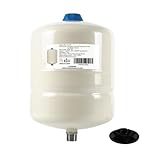

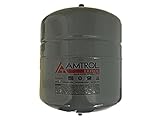
Why Expansion Tank Sizing Matters: A Complete Guide to Thermal Expansion, Pressure Control, and System Safety
An expansion tank is a small but critical component in any closed-loop hydronic heating or boiler system. Its job is to absorb the volume increase that occurs when water is heated — a phenomenon known as thermal expansion. Without a properly sized expansion tank, the pressure in your system can rise rapidly as the boiler heats up, eventually reaching the relief valve setting and discharging water. Over time, this pressure cycling stresses pipes, valves, and the boiler itself, leading to leaks, premature failure, and costly repairs. An undersized tank is one of the most common causes of boiler pressure problems, while an oversized tank wastes money and space. This calculator helps you find the correct size by considering your system volume, fill pressure, maximum temperature, relief valve setting, and glycol concentration.
The Physics of Thermal Expansion: Why Water Needs Room to Grow
Water expands as it heats. Between 40°F and 180°F, water increases in volume by roughly 4–5%. That may not sound like much, but in a 50-gallon system, that is 2–2.5 gallons of extra volume. In a closed system with nowhere for that water to go, the pressure rises dramatically. The relationship is governed by the bulk modulus of water — a measure of how much pressure is needed to compress it. Water is nearly incompressible, so even a small volume increase creates a large pressure spike. An expansion tank provides a compressible air cushion (or a diaphragm separating air from water) that absorbs the extra volume, keeping system pressure within safe limits. The tank's air pre-charge is set to match the system's cold fill pressure, so the tank is partially filled with water only when the system heats up.
The Key Variables: System Volume, Fill Pressure, and Temperature Rise
Four variables determine the correct expansion tank size. First, system water volume: the more water in the boiler, pipes, and radiators, the more it expands. A typical home hydronic system holds 30–80 gallons, but larger homes or systems with big cast-iron radiators can hold 150 gallons or more. Second, cold fill pressure: the pressure you charge the system to when it is cold, typically 12–15 psi for a two-story home. This is also the tank's air pre-charge pressure. Third, maximum temperature: the highest temperature the boiler reaches, typically 180°F for standard hydronic, but up to 220°F for high-temp systems. The temperature rise from cold fill (say 60°F) to max temp (180°F) determines the expansion volume. Fourth, relief valve setting: the pressure at which the relief valve opens, typically 30 psi. The expansion tank must keep system pressure below this threshold at maximum temperature. Our calculator uses all four inputs.
Step-by-Step: How the Calculator Estimates Expansion Tank Size
The calculator follows a transparent, repeatable formula that mirrors professional sizing methods:
| Factor | How It Is Applied | Typical Impact |
|---|---|---|
| System water volume | Base volume in gallons | Sets the baseline expansion volume |
| Temperature rise | Max temp minus cold fill temp (assumed 60°F) | Determines expansion coefficient |
| Expansion coefficient | Based on water properties at temperature | ~4–5% for 180°F systems |
| Fill pressure | Used to calculate acceptance volume | Higher fill pressure reduces tank size |
| Relief valve setting | Maximum allowable pressure | Higher relief setting allows smaller tank |
| Glycol concentration | Multiplier on expansion coefficient | +10–20% for 50% glycol |
After calculating the expansion volume and acceptance volume, the calculator rounds the result to the nearest standard tank size (e.g., 2, 4, 5, 8, 12, 15, 20, 30 gallons) and suggests a practical tank class. It also checks whether the calculated tank size is feasible given the relief valve setting and provides a safety margin note.
Why Oversizing an Expansion Tank Is Less Harmful Than Undersizing
Unlike many HVAC components, an oversized expansion tank is generally not a problem. A larger tank simply provides more air cushion and runs at a lower pressure, which is easier on the system. The main downsides are higher cost, larger physical footprint, and slightly more heat loss from the tank surface. Undersizing, on the other hand, is a serious issue. An undersized tank allows pressure to rise to the relief valve setting, causing repeated discharge, which wastes water and energy, and can lead to relief valve failure. It also stresses the boiler and pipes, potentially causing leaks at joints and fittings. If you are unsure between two sizes, choose the larger one — the extra margin is worth the small additional cost. Our calculator rounds up to the nearest standard size for this reason.
Expansion Tank vs. Traditional Closed Tank: Sizing Differences
Older systems sometimes used a plain steel tank with an air cushion that gradually absorbed water and lost its charge. Modern expansion tanks use a butyl or EPDM diaphragm to separate air from water, so the air charge does not dissolve into the water. This makes sizing more predictable and the tank more reliable. Diaphragm tanks are sized by total volume and acceptance volume. The total volume is the tank's physical size; the acceptance volume is how much water it can absorb. For a given total volume, a diaphragm tank accepts less water than a plain tank because the diaphragm takes up space. Our calculator estimates the required acceptance volume and then selects a standard diaphragm tank size that provides it. Always check the tank's acceptance volume on its label, not just its total volume.
Real-World Examples and Sanity Checks
Consider a typical 2-story home with a 50-gallon hydronic system, 12 psi cold fill, 180°F max temp, and a 30 psi relief valve. Temperature rise = 180°F – 60°F = 120°F. Expansion coefficient for water at 180°F is about 0.043. Expansion volume = 50 × 0.043 = 2.15 gallons. The acceptance volume required depends on the pressure ratio: acceptance = expansion / (1 – (fill + 14.7) / (relief + 14.7)). With 12 psi fill and 30 psi relief: (12+14.7)/(30+14.7) = 26.7/44.7 = 0.597. Acceptance = 2.15 / (1 – 0.597) = 2.15 / 0.403 = 5.33 gallons. A standard 8-gallon diaphragm tank (with an acceptance volume of about 5–6 gallons) would be a good choice. Now consider a 100-gallon system with the same parameters: expansion = 4.3 gallons, acceptance = 10.7 gallons, requiring a 15–20 gallon tank. These examples show why system volume is the dominant factor.
Additional Factors the Calculator Cannot Capture
No online calculator can replace a professional hydronic system assessment, but our tool covers the dominant variables for expansion tank sizing. Still, be aware of factors that can affect performance. System design temperature: if your boiler runs at 200°F or higher, the expansion coefficient increases significantly. Glycol concentration: glycol expands more than water, and the exact percentage affects the calculation; our calculator provides a rough multiplier, but for precise work use the glycol manufacturer's data. Altitude: at high elevations, atmospheric pressure is lower, which affects the pressure ratio calculation. Tank location: the tank should be connected near the boiler on the suction side of the circulator, and the connecting pipe should be sized to avoid pressure drop. Air elimination: modern systems use air separators and microbubble resorbers; if your system has a lot of trapped air, the expansion tank may not perform as expected. If your situation is unusual in any of these dimensions, consult a licensed hydronic technician.
| System Volume (gallons) | Typical Tank Size (30 psi relief) | Typical Tank Size (50 psi relief) | Typical Use Case |
|---|---|---|---|
| 10–20 | 2–4 gallons | 2–3 gallons | Small apartment, single-zone baseboard |
| 20–40 | 4–8 gallons | 3–5 gallons | Small home, 2–3 zones |
| 40–60 | 8–12 gallons | 5–8 gallons | Typical 2-story home, 3–4 zones |
| 60–100 | 12–20 gallons | 8–12 gallons | Large home, cast-iron radiators |
| 100–200 | 20–30 gallons | 12–20 gallons | Very large home, commercial, multiple boilers |
| 200+ | 30+ gallons or multiple tanks | 20+ gallons or multiple tanks | Commercial, institutional, district heating |
Diaphragm vs. Bladder Tanks: What's the Difference?
Expansion tanks come in two main designs: diaphragm and bladder. A diaphragm tank has a fixed rubber diaphragm that separates the air charge from the water. As water enters, it pushes against the diaphragm, compressing the air. A bladder tank has a balloon-like bladder that holds the water, with air surrounding it. Both work well, but bladder tanks are often preferred because the water does not contact the steel shell, reducing corrosion risk. Diaphragm tanks are typically less expensive and are common in residential systems. When sizing, the acceptance volume is the key number — this is how much water the tank can hold at the maximum pressure. A tank's total volume is always larger than its acceptance volume; for example, a 12-gallon tank might have an acceptance volume of only 6–8 gallons. Always check the acceptance volume, not just the total volume, when comparing tanks.
Expansion Tank Pre-Charge: Why It Must Match Fill Pressure
Every expansion tank comes with a factory air pre-charge, often 12 psi or 20 psi. For the tank to work correctly, the pre-charge must match your system's cold fill pressure. If the pre-charge is too low, the tank will accept water too early and may not provide enough cushion at high temperature. If the pre-charge is too high, the tank will not accept water until the pressure exceeds the pre-charge, causing pressure spikes. Always check the pre-charge with a tire gauge before installation and adjust it to match your fill pressure. Our calculator assumes the pre-charge equals the fill pressure. If you are replacing an existing tank, verify the pre-charge and adjust as needed. This is a simple step that many homeowners overlook, but it can make the difference between a system that runs smoothly and one that constantly discharges from the relief valve.
Energy Efficiency, Maintenance, and Operating Cost
A correctly sized expansion tank does not directly save energy, but it prevents energy waste from relief valve discharge and boiler short-cycling. When a boiler loses pressure, it may refill with cold water, which must then be heated — wasting energy. Repeated relief valve discharge also wastes water and can corrode the valve seat. A properly sized tank keeps system pressure stable, allowing the boiler to operate at its design efficiency. Maintenance is minimal: check the tank's air charge annually, and replace the tank if it becomes waterlogged (full of water with no air cushion). A waterlogged tank is a common failure mode; if you hear water sloshing when you tap the tank, or if the system pressure rises quickly, the tank may need replacement. Most diaphragm tanks last 5–10 years. Our calculator helps you choose the right size the first time, so you can avoid the cycle of frequent replacements and pressure problems.
Frequently Asked Questions
How do I know if my expansion tank is bad?
Common signs of a failed expansion tank include: system pressure rises rapidly when the boiler heats up; the relief valve discharges frequently; you hear water sloshing when you tap the tank; or the tank feels heavy and full of water. To test, shut off the boiler, drain the tank, and check the air charge with a tire gauge. If water comes out of the air valve, the diaphragm has failed and the tank must be replaced.
Can I use a larger expansion tank than recommended?
Yes, using a larger tank is generally safe and often beneficial. A larger tank provides more air cushion, runs at lower pressure, and reduces stress on the system. The main downsides are higher cost and a larger physical footprint. If you are unsure between two sizes, choose the larger one. Just make sure the tank's pre-charge matches your system fill pressure.
What is the difference between total volume and acceptance volume?
Total volume is the physical size of the tank. Acceptance volume is how much water the tank can actually absorb at the maximum system pressure. Because the diaphragm and air charge take up space, acceptance volume is always less than total volume — often 50–70% of it. Always size by acceptance volume, not total volume. A 12-gallon tank might only accept 6–8 gallons of water.
Do I need an expansion tank on a tankless water heater?
Generally, no. Tankless water heaters are part of a domestic water system that is open to the atmosphere via the water main, so thermal expansion is absorbed by the municipal water supply or a thermal expansion tank on the cold water line. However, if you have a closed domestic water system (e.g., with a backflow preventer or pressure reducing valve), you may need a thermal expansion tank on the water heater. This is a different application than a hydronic heating expansion tank.
How do I calculate system water volume?
System volume is the total amount of water in the boiler, pipes, and radiators. You can estimate it by adding the boiler's water capacity (from its manual), the pipe volume (based on length and diameter), and the radiator volume (from manufacturer data or typical values per section). A rough rule: 1 gallon per 10,000 BTU/hr of boiler output for typical residential systems. For a 100,000 BTU/hr boiler, that is about 10 gallons, but actual volume depends on pipe size and radiator type.
What pressure should my expansion tank be charged to?
The tank's air pre-charge should match your system's cold fill pressure, typically 12–15 psi for a two-story home. If your fill pressure is 12 psi, charge the tank to 12 psi. Check it with a standard tire gauge. If the pre-charge is too low, the tank will accept water too early; if too high, it will not accept water until pressure spikes. Always set the pre-charge before installing the tank.
Does glycol affect expansion tank sizing?
Yes. Glycol expands more than water, so a system with glycol needs a larger expansion tank. A 50% glycol solution can increase the expansion coefficient by 10–20% compared to water. Our calculator includes a glycol adjustment, but for precise work, use the glycol manufacturer's expansion data. Always use the actual concentration in your system, not an estimate.
Can I install an expansion tank myself?
Installing an expansion tank is a moderate DIY task for someone comfortable with basic plumbing. The tank connects to the boiler's supply or return line, usually near the boiler, with a tee fitting. You must relieve system pressure, drain enough water to allow the connection, install the tank, and then refill and purge the system. If you are not comfortable with soldering or threading pipe, hire a licensed plumber or hydronic technician. Improper installation can cause leaks or pressure problems.
How long does an expansion tank last?
A typical diaphragm expansion tank lasts 5–10 years. The diaphragm eventually degrades and fails, allowing water to fill the tank and eliminating the air cushion. Regular annual checks of the air charge can extend the life. If you notice pressure problems or water sloshing in the tank, replace it. Bladder tanks may last slightly longer because the water does not contact the steel shell, reducing corrosion.
What is the relief valve setting and why does it matter?
The relief valve setting is the pressure at which the valve opens to discharge water and prevent overpressure. It is typically 30 psi for residential boilers, but can be 50 psi or higher for some systems. The expansion tank must keep system pressure below this setting at maximum temperature. A higher relief valve setting allows a smaller tank because the acceptance volume can be lower. Always check your boiler's rating plate for the correct relief valve setting.
Expansion Tank Sizing Checklist
- Estimate total system water volume (boiler + pipes + radiators)
- Determine cold fill pressure (typically 12–15 psi)
- Identify maximum system temperature (180°F standard, 200°F+ high-temp)
- Check relief valve setting (usually 30 psi)
- Note glycol concentration if applicable
- Use the calculator to get required acceptance volume
- Select a standard tank with an acceptance volume at least as large as required
- Verify the tank's air pre-charge matches fill pressure
- Install near the boiler on the suction side of the circulator
- Check the air charge annually and replace waterlogged tanks promptly
Professional Sizing vs. Rule-of-Thumb
Hydronic professionals use detailed calculations that consider exact water volume, pipe sizes, boiler characteristics, and local code requirements. Those calculations are more precise than any online tool, but they are also time-consuming and often overkill for a single-family home. Our calculator sits between the crude "one size fits all" approach and a full manual calculation. It captures the variables that matter most for expansion tank sizing — system volume, fill pressure, temperature rise, and relief valve setting — while keeping the interface simple. If you are sizing for a commercial building, a large custom home, or a system with unusual design temperatures, consider hiring a licensed hydronic technician to verify the load. For a typical residence, the calculator's result will serve you well.
Final Thoughts: Matching the Tank to the System
The right expansion tank size is the one that absorbs thermal expansion without letting system pressure approach the relief valve setting. Use this calculator as your first step, then check the acceptance volume on any tank you consider. Remember that expansion tanks are relatively inexpensive compared to the cost of boiler repairs or emergency service calls. If you are replacing a tank, take the opportunity to verify the system volume and fill pressure — you may find that the old tank was undersized, which explains recurring pressure problems. Bookmark this page, run your numbers before you buy, and enjoy a stable, efficient hydronic heating system for years to come.